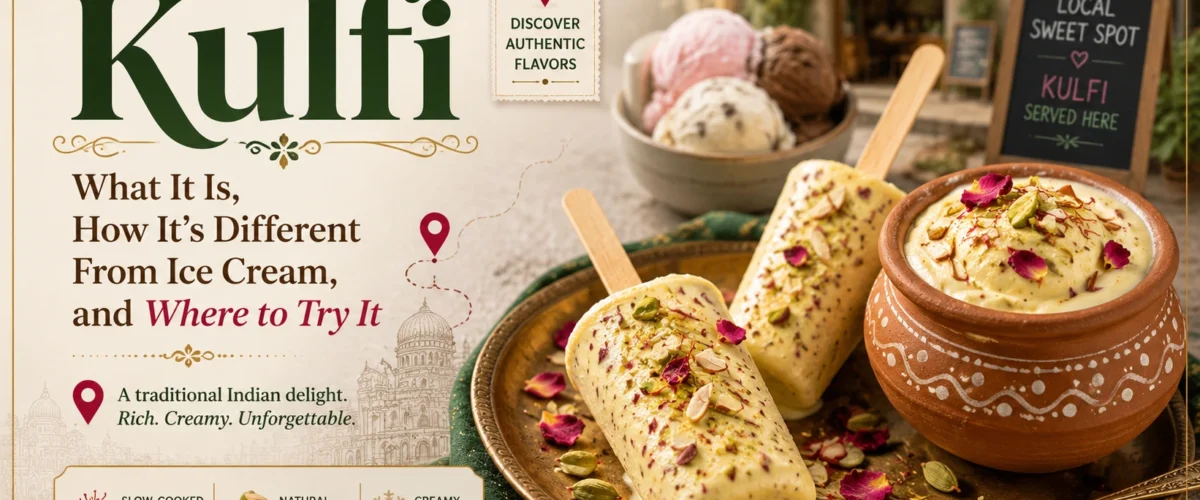
What Is Kulfi? How It’s Different From Ice Cream, and Where to Try It

Denser than ice cream, slower to melt, and impossible to rush: kulfi rewards patience, both in how it's made and how it's eaten.
Kulfi is a dense, creamy frozen dessert from South Asia, made by slowly reducing milk until it thickens, then freezing it without churning. That lack of churning is what sets it apart from Western ice cream: it's richer, melts more slowly, and has a smoother, almost fudge-like texture. It comes in traditional flavours like malai, pistachio, and mango, and it's a staple dessert across Indian, Pakistani, and Bangladeshi cuisine.
What Is Kulfi?

Kulfi is a frozen dairy dessert that's often described as South Asia's answer to ice cream, though it's really its own category once you taste it side by side with one. It dates back to the Mughal era in 16th-century Delhi, and the name itself comes from the Persian word "qulfi," meaning "covered cup," a reference to the small metal or clay moulds it was traditionally frozen in.
Today it's a staple dessert across India, Pakistan, and Bangladesh, and it's popular anywhere South Asian cuisine has travelled, including on halal dessert menus right here in Ontario. It's typically served on a stick, in a small cup, or sliced from a cone-shaped mould, sometimes alongside falooda (sweet vermicelli noodles) for a more elaborate presentation.
Kulfi isn't the only halal dessert with a story behind it. See how it compares to another South Asian classic in What Is Gulab Jamun? The Soft, Syrup-Soaked Halal Dessert Explained.
What Is Kulfi Made Of?
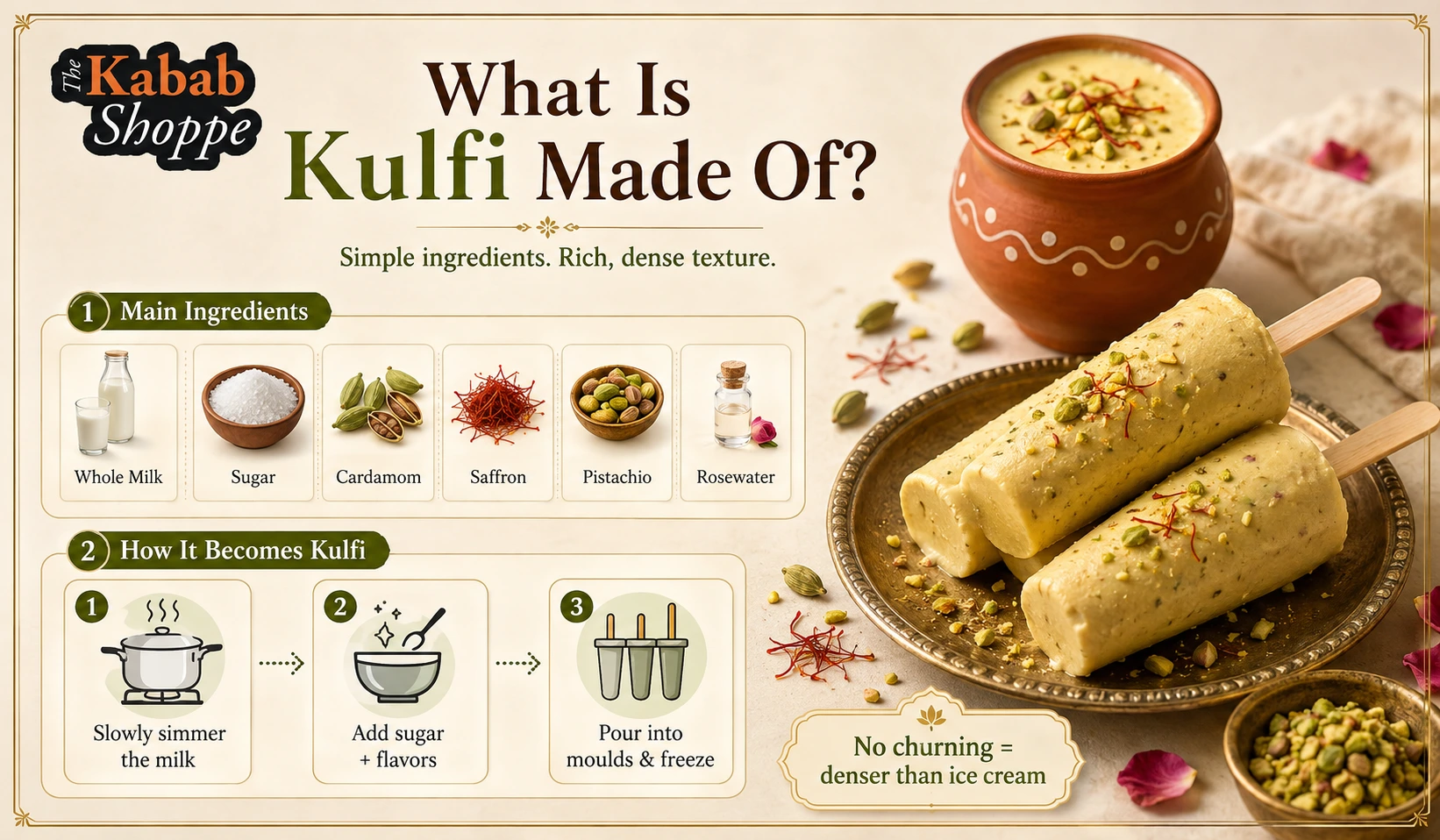
The base is deceptively simple: whole milk, slowly simmered over low heat for a long stretch of time until it reduces and thickens considerably, similar in spirit to how khoya is made for other South Asian sweets. Sugar is added to sweeten it, and then it's flavoured, most traditionally with cardamom, saffron, and rosewater, though pistachio, mango, and other flavourings are just as common today. It's the same slow, patient technique behind homemade gulab jamun, just taken in a frozen direction instead of a fried one.
Once the milk mixture is flavoured, it's poured into a mould and frozen solid without any churning. That single difference from ice cream-making is what defines almost everything about kulfi's final texture and taste.
How Is Kulfi Different From Ice Cream?
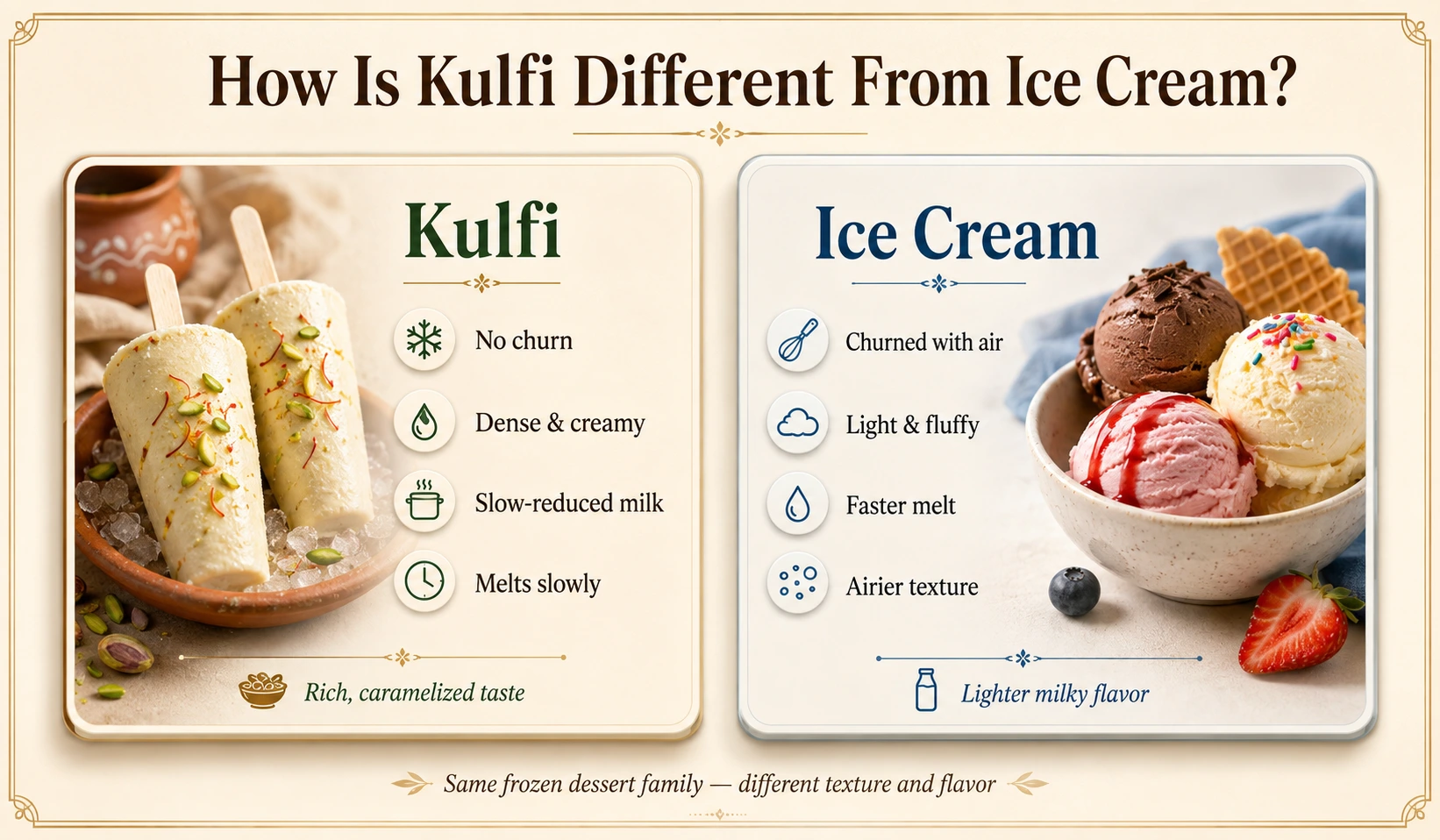
On paper, both are frozen, sweetened dairy desserts, but the way they're made pulls them apart in texture and flavour:
Kulfi
Never churned. Dense, smooth, and almost fudge-like. Made from slow-reduced whole milk. Melts slowly and holds its shape at room temperature longer than ice cream.
Ice Cream
Churned while freezing, which whips air into the mixture. Lighter, fluffier texture, and melts noticeably faster once out of the freezer.
The slow reduction of the milk also gives kulfi a deeper, slightly caramelized flavour that plain ice cream doesn't have, since that long simmer concentrates and lightly toasts the milk's natural sugars.
What Flavours Does Kulfi Come In?
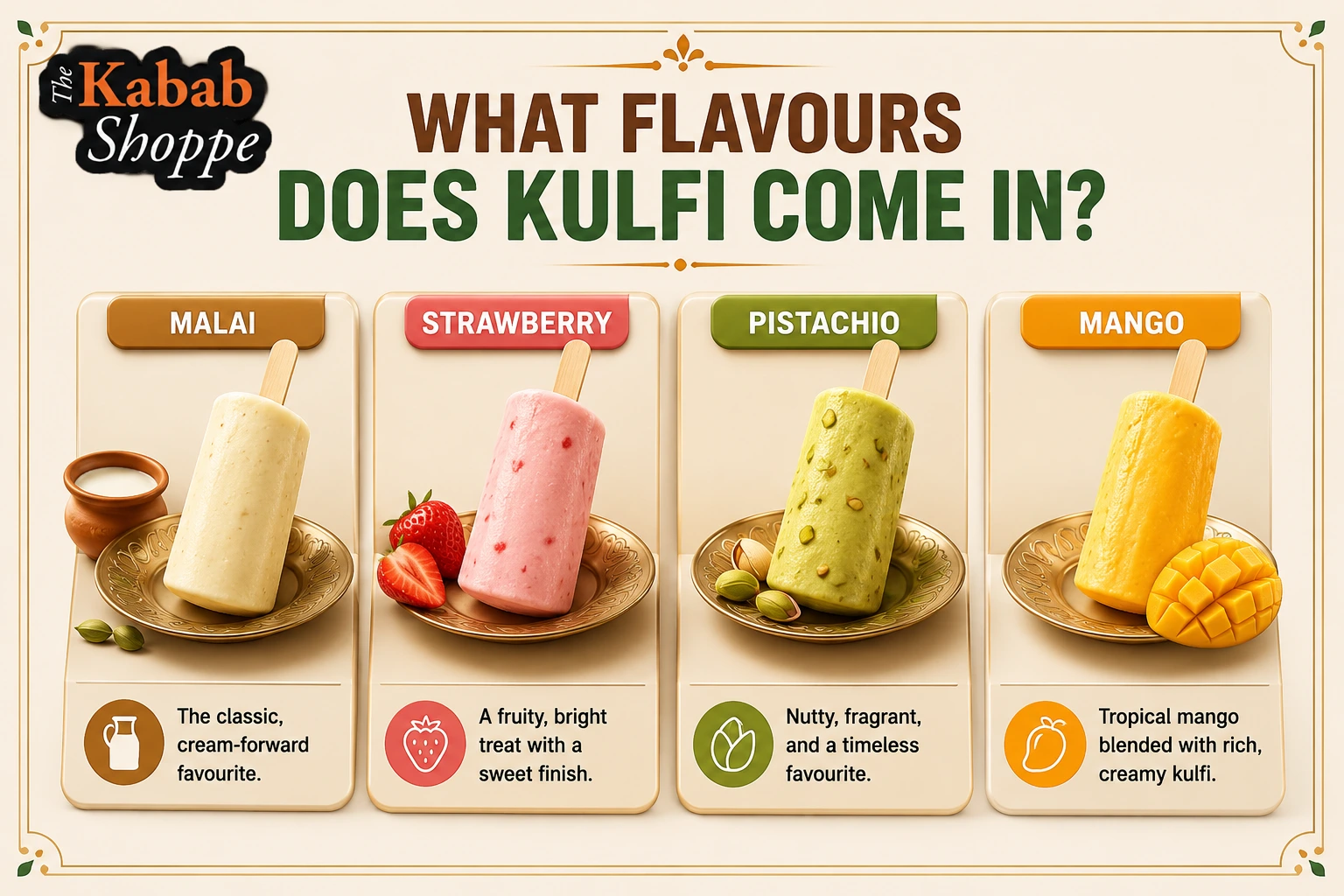
Traditional kulfi leans on cardamom, saffron, pistachio, and mango, but the flavour list has expanded well beyond that over the years. At The Kabab Shoppe, kulfi is available in four flavours:
Malai
The classic, plain, cream-forward version. Lets the slow-reduced milk flavour speak for itself.
Strawberry
A fruitier, brighter take that balances the dense, rich texture with fresh sweetness.
Pistachio
One of the most traditional flavours, nutty and fragrant, often the most requested.
Mango
A popular warm-weather favourite, pairing the tropical fruit with kulfi's dense, creamy base.
Is Kulfi Halal, Dairy, or Nut-Free?
Kulfi is a milk-based dessert with no inherently non-halal ingredients, and it's served 100% halal certified at The Kabab Shoppe. It is not dairy-free, since whole milk is the entire base of the recipe, and it's not suitable for anyone avoiding dairy. Whether it contains nuts depends on the flavour: pistachio kulfi obviously does, and other flavours are sometimes garnished with almond or pistachio slivers.
How Long Does Kulfi Last, and Can It Be Refrozen?
Kept airtight in the freezer, kulfi generally holds its texture and flavour well for a few weeks to a couple of months. Once it's thawed, though, it's best enjoyed right away rather than refrozen, since repeated melting and refreezing breaks down the texture and can affect food safety in the same way it would with any frozen dairy dessert.
Where Can You Try Kulfi Near You?
Kulfi is on the dessert menu at every Kabab Shoppe location across Pickering, Whitby, Oshawa, and Brampton, made in all four flavours, malai, strawberry, pistachio, and mango. We also cover it alongside our other halal desserts in Best Desserts in Durham: Firnee, Kulfi & Gulab Jamun, if you're deciding what to order alongside it. Building a full meal around it? See What to Serve With Butter Chicken: The Best Sides and Pairings for ideas on what to order before dessert.
Order Kulfi From The Kabab Shoppe
Fresh, halal-certified, and available in four flavours for dine-in, takeout, or catering at any of our four locations.
Frequently Asked Questions
The most common questions people ask about kulfi, answered in short.
What is kulfi made of?
Kulfi is made by slowly simmering whole milk over low heat until it reduces and thickens, then sweetening it and flavouring it with ingredients like cardamom, saffron, pistachio, or mango before freezing it in a mould without churning.
How is kulfi different from ice cream?
Ice cream is churned while it freezes, which incorporates air and gives it a light, fluffy texture. Kulfi is never churned, so it stays dense and creamy, has a richer flavour from the slow-reduced milk, and melts noticeably slower than regular ice cream.
Is kulfi halal?
Kulfi itself is a simple milk-based dessert with no inherently non-halal ingredients, and it's served 100% halal certified at The Kabab Shoppe. As with any dish, it's worth confirming certification with the specific restaurant or brand you're ordering from.
Does kulfi contain nuts?
It depends on the flavour. Pistachio kulfi obviously contains nuts, and other flavours are sometimes garnished with almond or pistachio slivers, so anyone with a nut allergy should confirm ingredients with the restaurant before ordering.
Is kulfi gluten-free?
Traditional kulfi, made from milk, sugar, and flavourings, is generally gluten-free, though it's always worth checking with the specific kitchen in case any thickeners or mix-ins used differ from the traditional recipe.
How long does kulfi last in the freezer?
Stored airtight in the freezer, kulfi typically keeps well for a few weeks to a couple of months without a major drop in texture or flavour.
Can you refreeze kulfi once it's thawed?
It's not recommended. Like most frozen dairy desserts, kulfi loses texture and quality once it melts and is refrozen, and repeated thawing can affect food safety, so it's best enjoyed once it's been thawed.
What is the most popular kulfi flavour?
Pistachio and mango are traditionally the most popular kulfi flavours, alongside malai (a plain, cream-forward version), though preferences vary widely by region and personal taste.




 Long before it became a name people recognize from restaurant signs across Ontario, Bamiyan was a real place with a long, layered history. It's a province and city in the central highlands of Afghanistan, sitting along one of the busiest stretches of the old Silk Road. Traders moving between China, Persia, and India passed through Bamiyan for centuries, and they brought more than goods with them — they brought spices, cooking techniques, and ingredients that shaped what Afghan food tastes like today.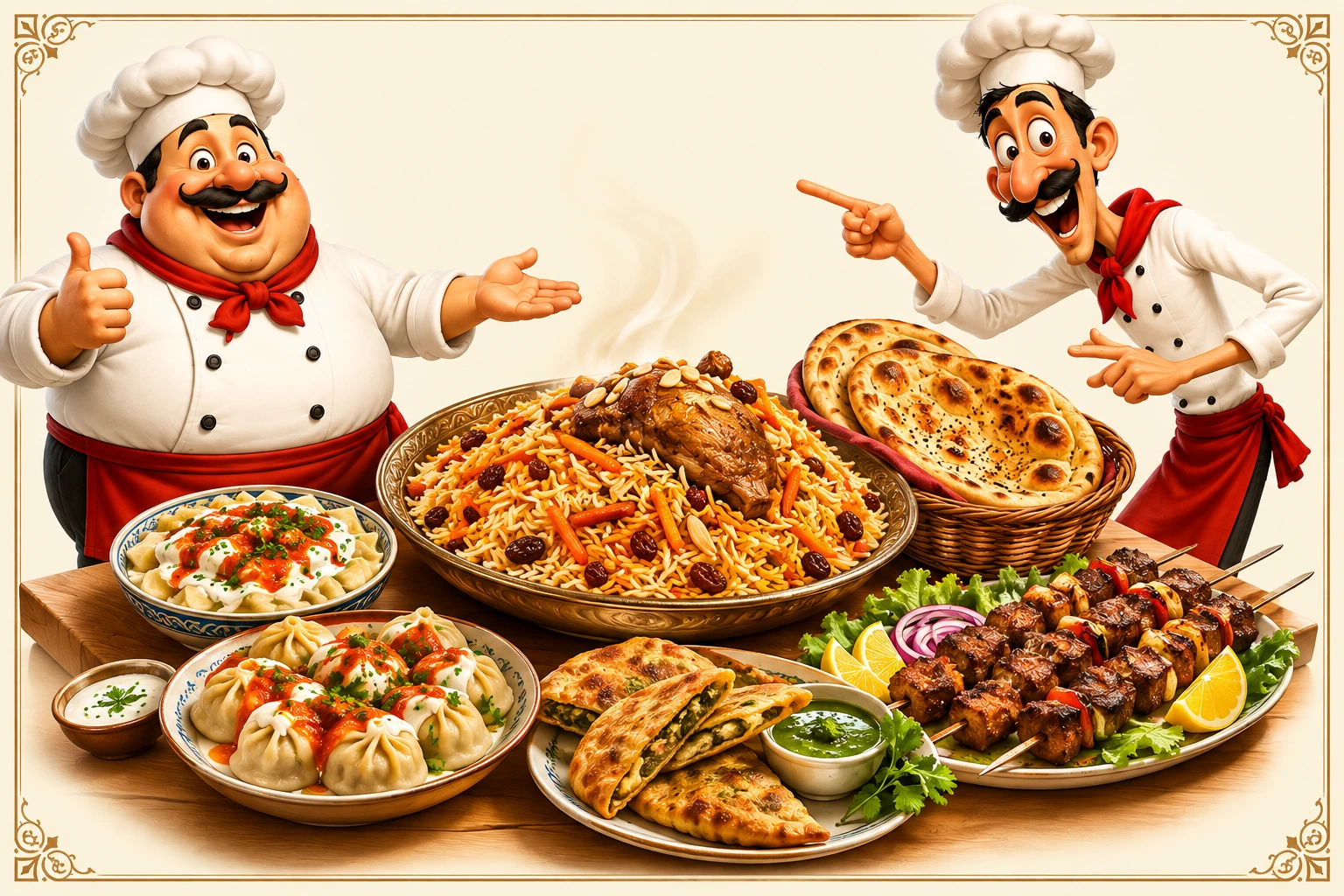

 Halal food prices have crept up everywhere in Ontario going into 2026 and 2027, and if you're feeding a family or grabbing lunch on a work break in Durham Region or Brampton, that adds up fast. That's the whole reason our daily specials exist: a fixed, honest price for a real meal, every single day, at every Kabab Shoppe location — not a one-week promo that quietly disappears. Below is exactly what's on offer each day, what it costs, and which of our Oshawa, Brampton, Whitby, and Pickering locations you can get it at.