Halal Thanksgiving Dinner Ideas: Turkey Swaps, Sides and Kabab Platters


Picture this: the whole family is coming over, your aunt is asking if the turkey is halal, your cousin wants to know if the gravy has wine in it, and you have not even bought groceries yet. Sound familiar? These halal Thanksgiving dinner ideas are for every Muslim family in Ontario who loves the gratitude, the long table, and the leftovers, but wants every dish to be something everyone can eat. Below you will find turkey swaps, side dishes, desserts, a simple planning timeline, and a kabab platter twist that saves you hours in the kitchen.
"Thanksgiving was never really about the turkey. It is about a full table, people you love, and food that welcomes everyone who sits down."The Kabab Shoppe Kitchen Team
Why a Halal Thanksgiving Menu Matters for Ontario Families
In Canada, Thanksgiving falls on the second Monday of October, and for many Muslim families it has become a relaxed long weekend for family time. It is not a religious holiday, but the idea of giving thanks fits easily with Islamic values. So families host, friends gather for Friendsgiving, and coworkers plan potlucks. The only question is what goes on the table.
A halal Thanksgiving menu takes the guesswork away. Nobody has to quietly skip the main dish or ask what is in the stuffing. Grandparents, kids, and non-Muslim friends can all share the same plates. That is a big part of what makes the day feel warm instead of awkward.
Plenty of families also celebrate a second time in late November with relatives in the United States. Whether you are planning for October, a November Friendsgiving, or next year, the ideas below work for any harvest-style dinner. If anyone at your table is new to halal food, our beginner's guide to halal food explains the basics in plain language.
What Makes a Thanksgiving Dish Halal?
Most Thanksgiving vegetables, grains, and fruit are halal by nature. The trouble usually hides in the meat and in a few store-bought shortcuts. Before you build your halal Thanksgiving menu, here are the common spots to check.
- The turkey or chicken: it needs to come from a certified halal source. A supermarket bird labelled only "natural" or "fresh" is not the same thing.
- Stuffing: many recipes use bacon, pork sausage, or chicken broth from a non-halal source.
- Gravy: classic recipes often add white wine, sherry, or pan drippings from non-halal meat.
- Green bean casserole and sides: some boxed fried onion toppings and soup bases contain animal fats, so read the label.
- Pie crust: some ready-made crusts use lard.
- Marshmallows and jello salads: many contain pork gelatin. Look for beef or plant-based gelatin.
Halal Thanksgiving Main Dish Ideas
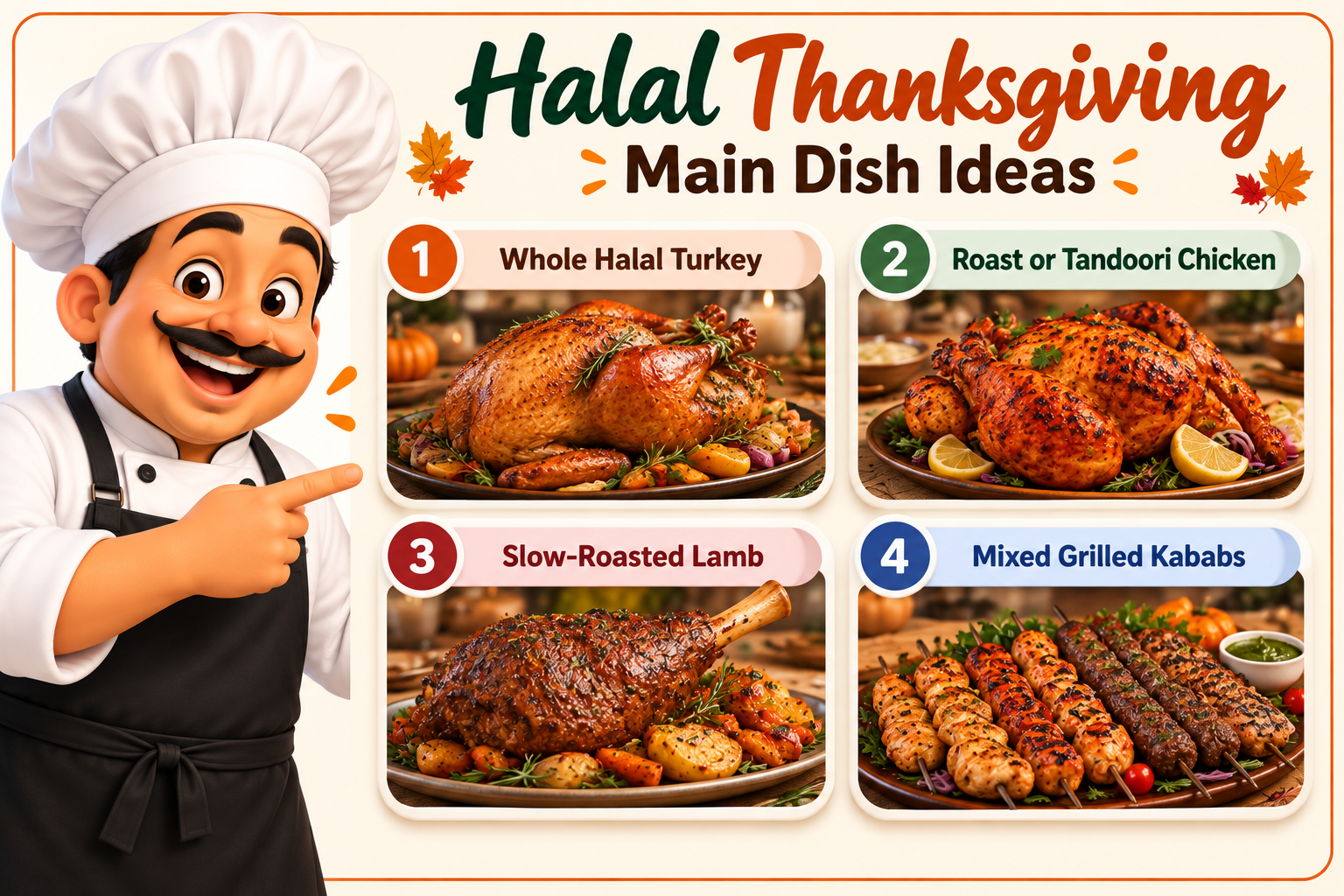
The main dish sets the tone for the whole meal. You can keep it traditional with a halal turkey or swap it for something that feeds a crowd with less effort. Here are four options that work well for Muslim families across Ontario.
1. A Whole Halal Turkey
If tradition matters to your family, order a halal turkey from a local halal butcher well ahead of time, since supply can be limited around the holiday. Brine it overnight in salt, sugar, garlic, and lemon for juicier meat. Rub it with butter, cumin, paprika, and a little garam masala for a flavour your guests will remember. Roast it on a bed of onions, carrots, and celery so the drippings make a halal gravy on their own.
2. Roast or Tandoori Chicken
Whole chickens cook faster than a turkey and are much easier to find halal. A tandoori marinade with yogurt, lemon, ginger, and spices gives the skin a smoky colour without a lot of work. Two or three chickens can feed the same group as one medium turkey. They also fit in a regular home oven, which helps if you are cooking several dishes at once.
3. Slow-Roasted Lamb or Lamb Shank
Lamb feels special and fits a holiday table perfectly. A bone-in leg or a few shanks, slow-roasted with garlic, rosemary, and cumin, will fall apart by the time guests arrive. It pairs well with rice and roasted root vegetables. If you prefer not to cook it yourself, a lamb shank can be added to your order at The Kabab Shoppe.
4. Mixed Grilled Kababs
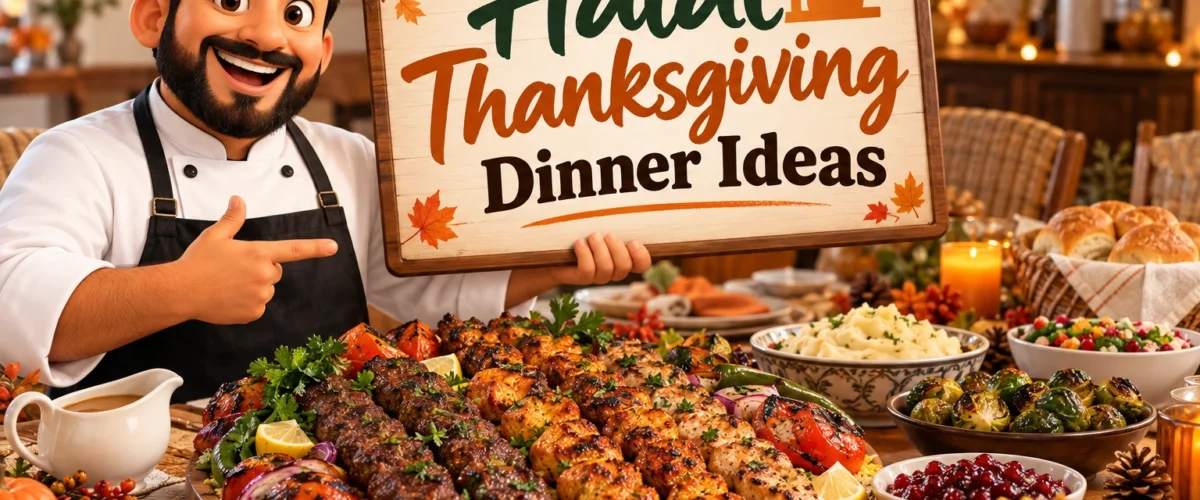
This is the option that changes the whole day. Instead of one large bird, you serve a spread of grilled skewers: chicken, tandoori chicken, beef shish kabab, and chaplee kabab. Everyone picks what they like. Nobody fights over the drumstick. That brings us to the easiest idea in this guide.
<!--The Kabab Platter Twist on the Holiday Table
A kabab platter does what a turkey does, only faster. It gives you a big shared centrepiece, a mix of chicken and beef, and enough food for leftovers. The difference is that it is ready hot for pickup, with rice, salad, and naan already included. You get your afternoon back for actual family time.
Every meat on our menu is certified halal and prepared in a fully halal kitchen. So when someone asks "is this halal?", the answer is simply yes, for every dish on the table. Here is how our full menu maps to a holiday dinner.
| Platter or Tray | What You Get | Feeds | Price |
|---|---|---|---|
| Mix Grill for Two | 6 veggie samosas, tandoori chicken, chicken breast, 2 shish kabab, rice, salad, 2 naan | 2 | $38.99 |
| Kabab Platter 1 | 2 tandoori chicken, 2 chicken breast, 2 shish kabab, large rice, salad, 4 naan | 3 to 4 | $59.99 |
| Kabab Platter 2 | Large tandoori chicken fries, 2 chaplee, 2 shish, 2 tandoori chicken, 2 chicken breast, large rice, salad, 4 naan | 5 to 6 | $74.99 |
| Family Trays | Tandoori, chicken breast, shish, chaplee, veal, butter chicken, falafel or chana masala, with rice, salad and fries | 3 to 4 | $39.99 to $54.99 |
Not sure which skewer to pick? Our side-by-side guide on chaplee kabab vs shish kabab breaks down flavour, texture, and spice so you can order with confidence. If you would rather grill some skewers at home and order the rest, our guide to grilling kababs like a pro walks you through marinades and heat.
Skip the Turkey Stress This Year
Order a hot, fully halal kabab platter for pickup in Pickering, Whitby, Oshawa or Brampton.
Order Online View the MenuHalal Thanksgiving Sides That Go Beyond Mashed Potatoes
Sides are where a halal Thanksgiving dinner can really show off. You can keep a few classics and mix in dishes that match the spices on your kababs. A good table has something creamy, something fresh, something starchy, and something crunchy.
Classic Sides, Made Halal
- Mashed potatoes with butter, garlic, and a pinch of black pepper.
- Halal stuffing made with halal beef sausage or no meat at all, plus vegetable or halal chicken broth.
- Roasted root vegetables like carrots, squash, and sweet potato with cumin and honey.
- Cranberry sauce made from scratch with fresh berries, orange zest, and sugar.
Sides With a Desi and Afghan Twist
Kabuli pulao is a natural fit for a harvest table. Fragrant basmati rice cooked with meat, carrots, and raisins tastes sweet and savoury at the same time, a lot like stuffing does. Afghan food traditions are full of dishes made for sharing, which is exactly what this holiday is about.
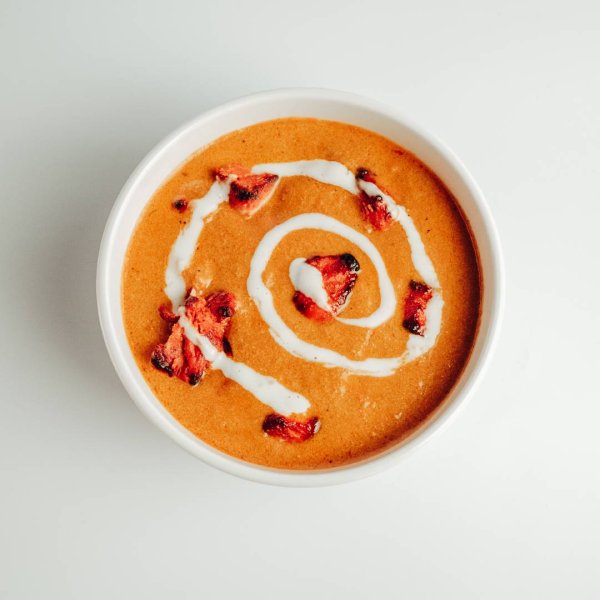
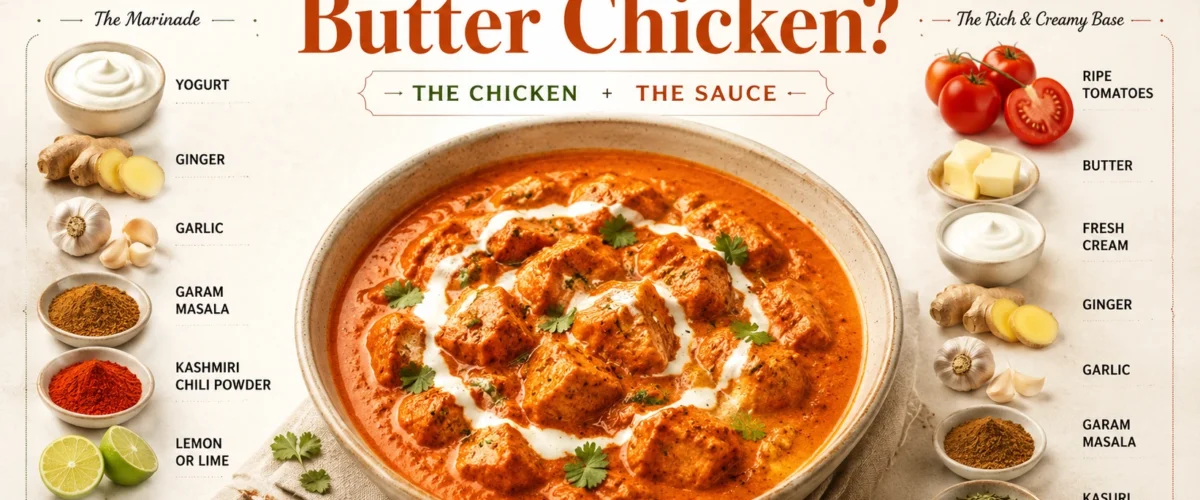
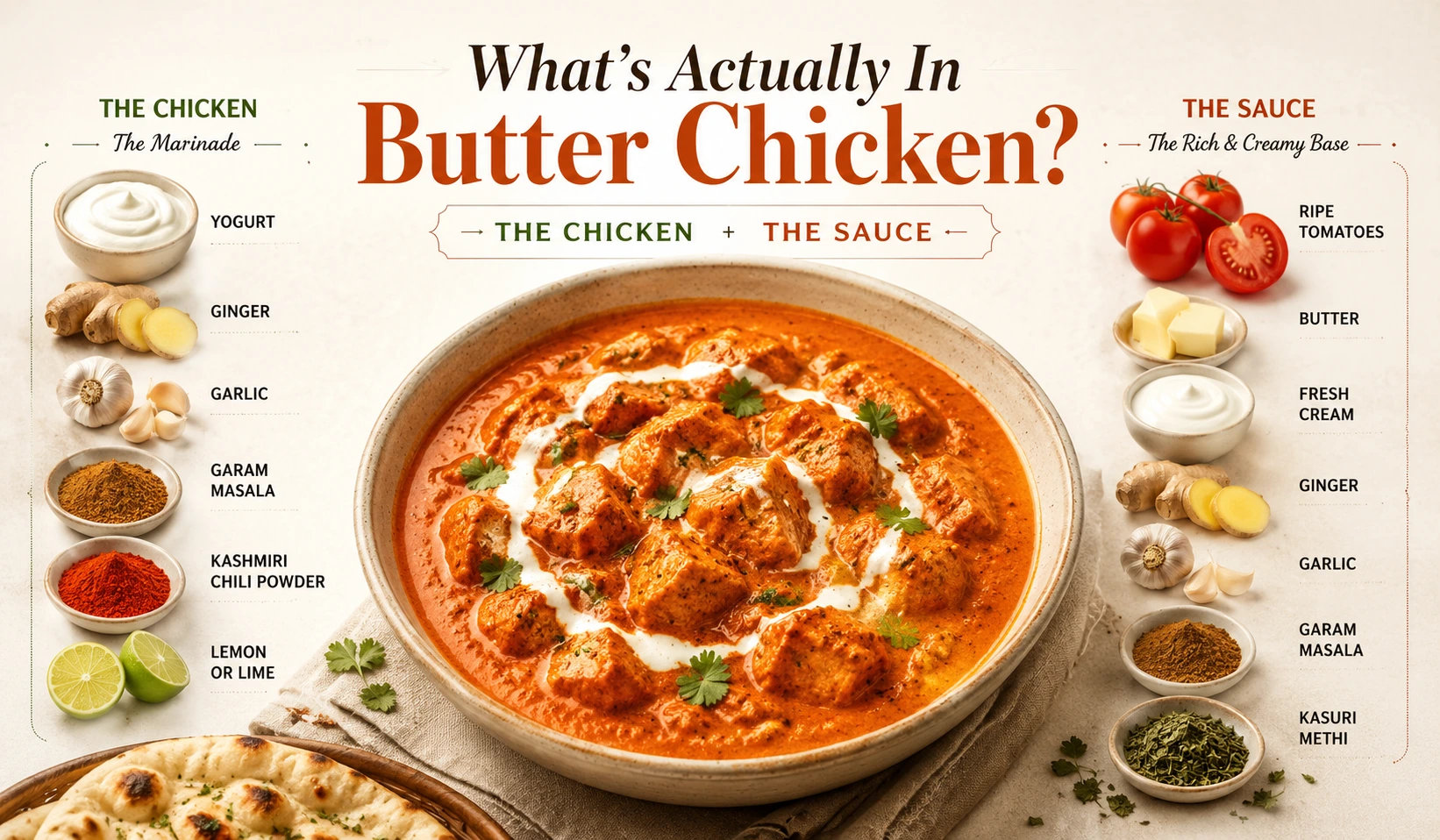
Warm naan replaces dinner rolls and is perfect for scooping. Our guide to what naan bread is covers the regular, garlic, and butter styles. Butter chicken works as a creamy, mild "gravy" for guests who want something saucy. For more pairing ideas, see what to serve with butter chicken.
Vegetarian Options for Every Guest
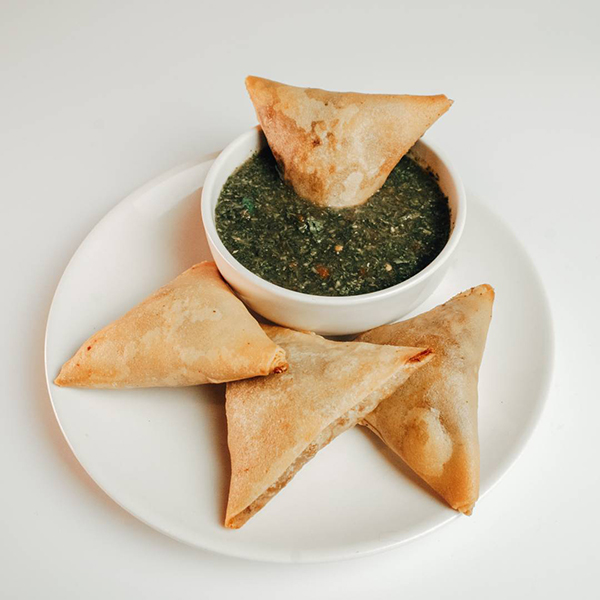
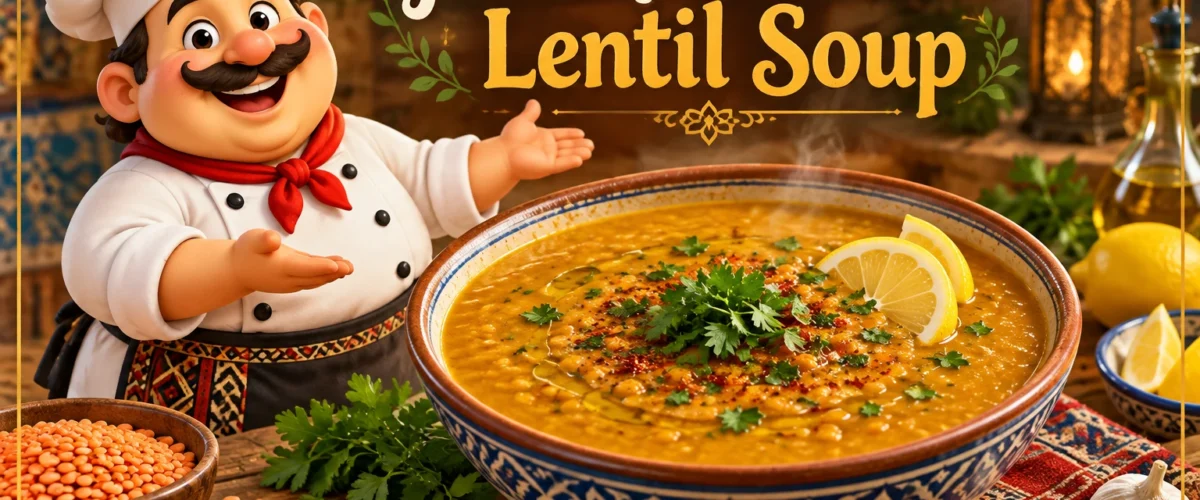
Many families have at least one vegetarian at the table. Chana masala, a hearty chickpea curry in tomato gravy, works as a main or a side. Falafel and samosas are easy finger foods for kids. A bowl of Middle Eastern lentil soup makes a warm starter on a chilly fall evening.
<!--Halal Thanksgiving Desserts Everyone Will Love
Pumpkin pie is still welcome at a halal table. Just make the crust yourself with butter or buy one without lard. Apple crisp is another easy win, made with Ontario apples, oats, butter, and cinnamon. Both can be baked the day before to free up your oven.
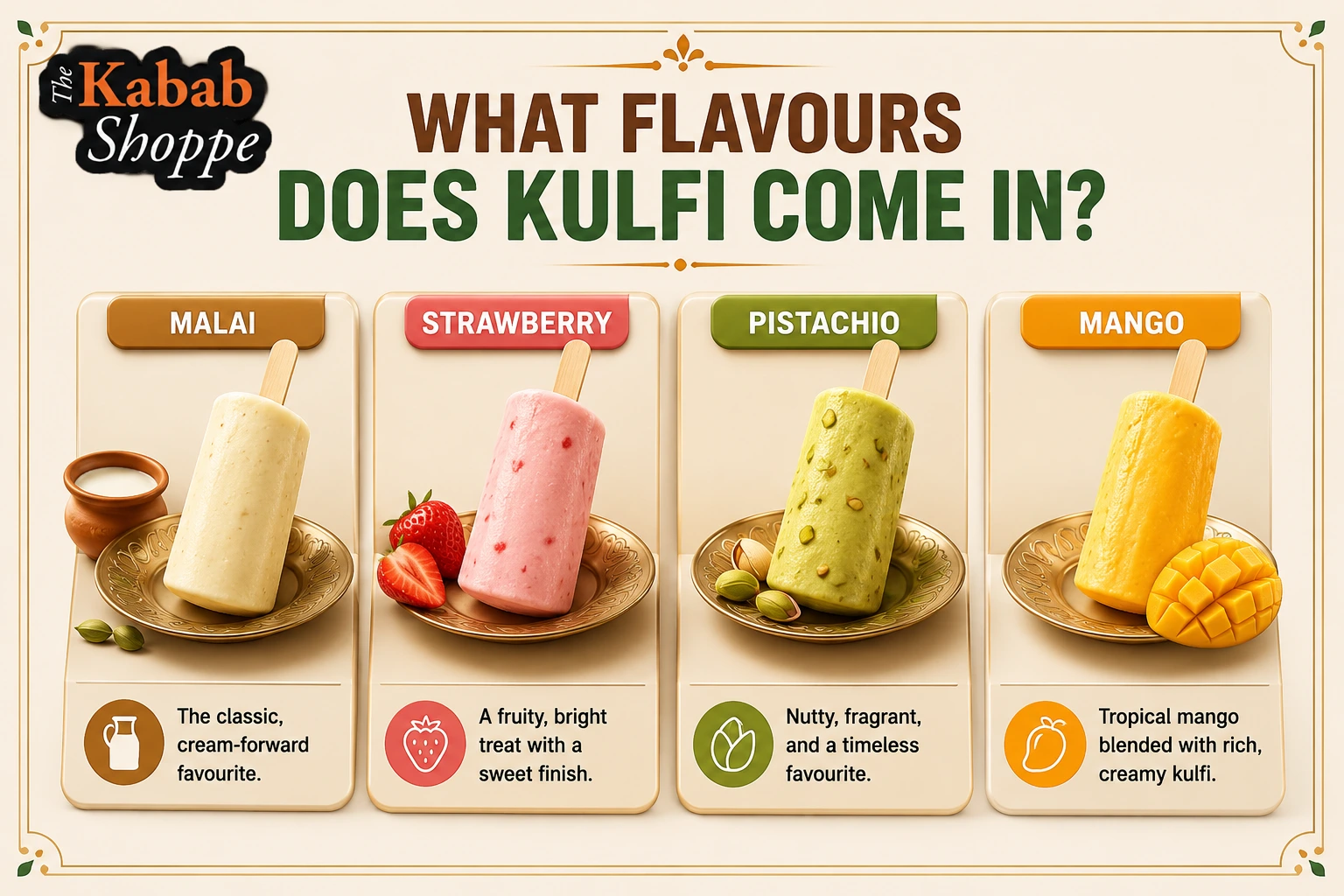
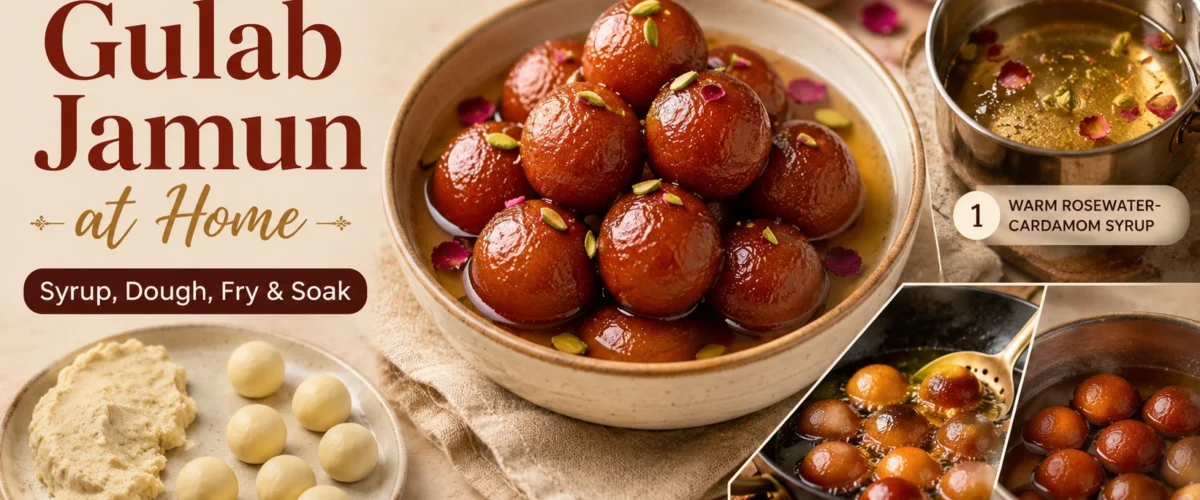
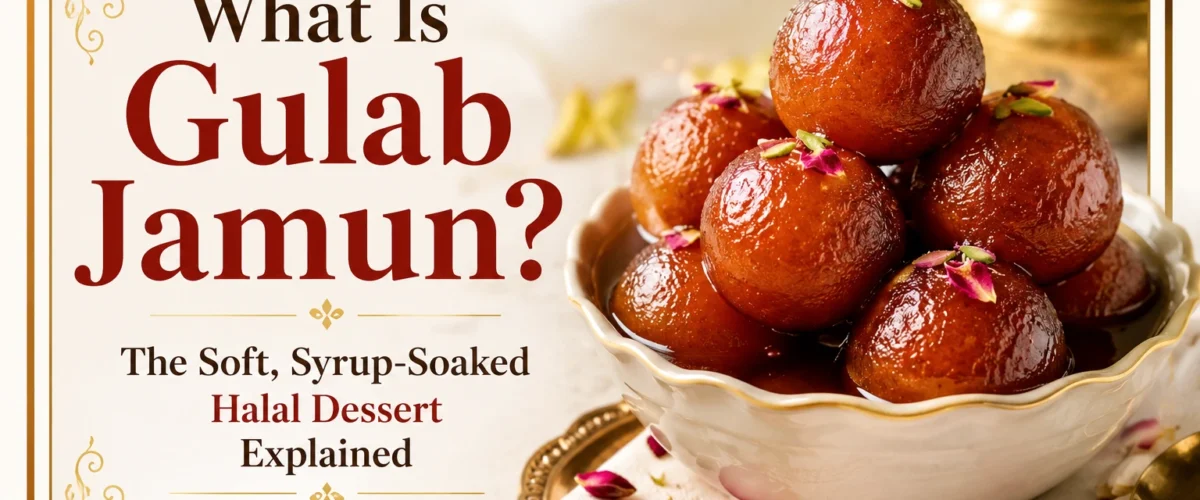
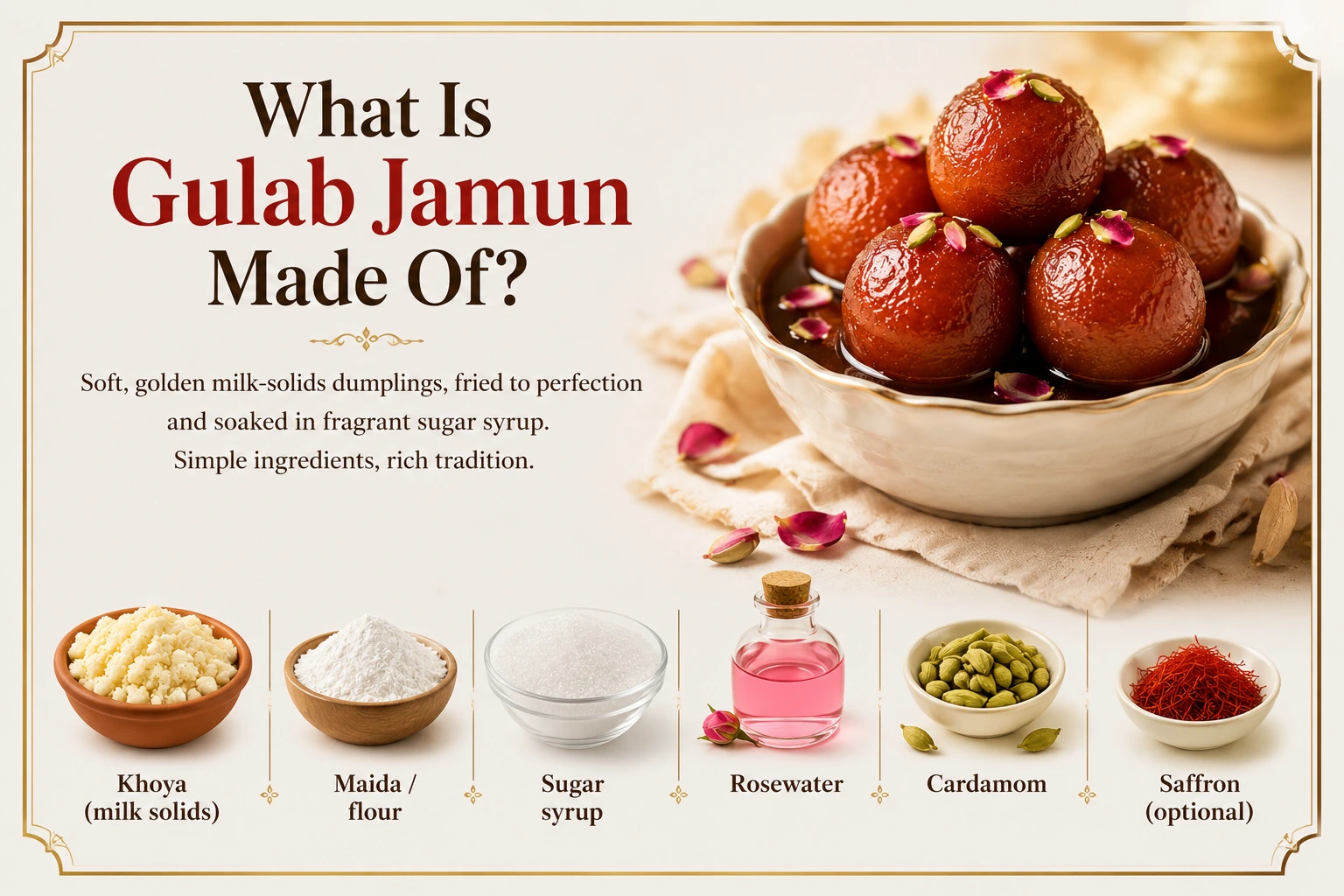
For something a little different, set out a small dessert board. Firnee is a creamy ground-rice pudding with almonds and pistachios. Gulab jamun are soft, syrup-soaked dough balls that kids and grandparents both love. Kulfi is a dense frozen dessert in malai, mango, pistachio, and strawberry flavours.
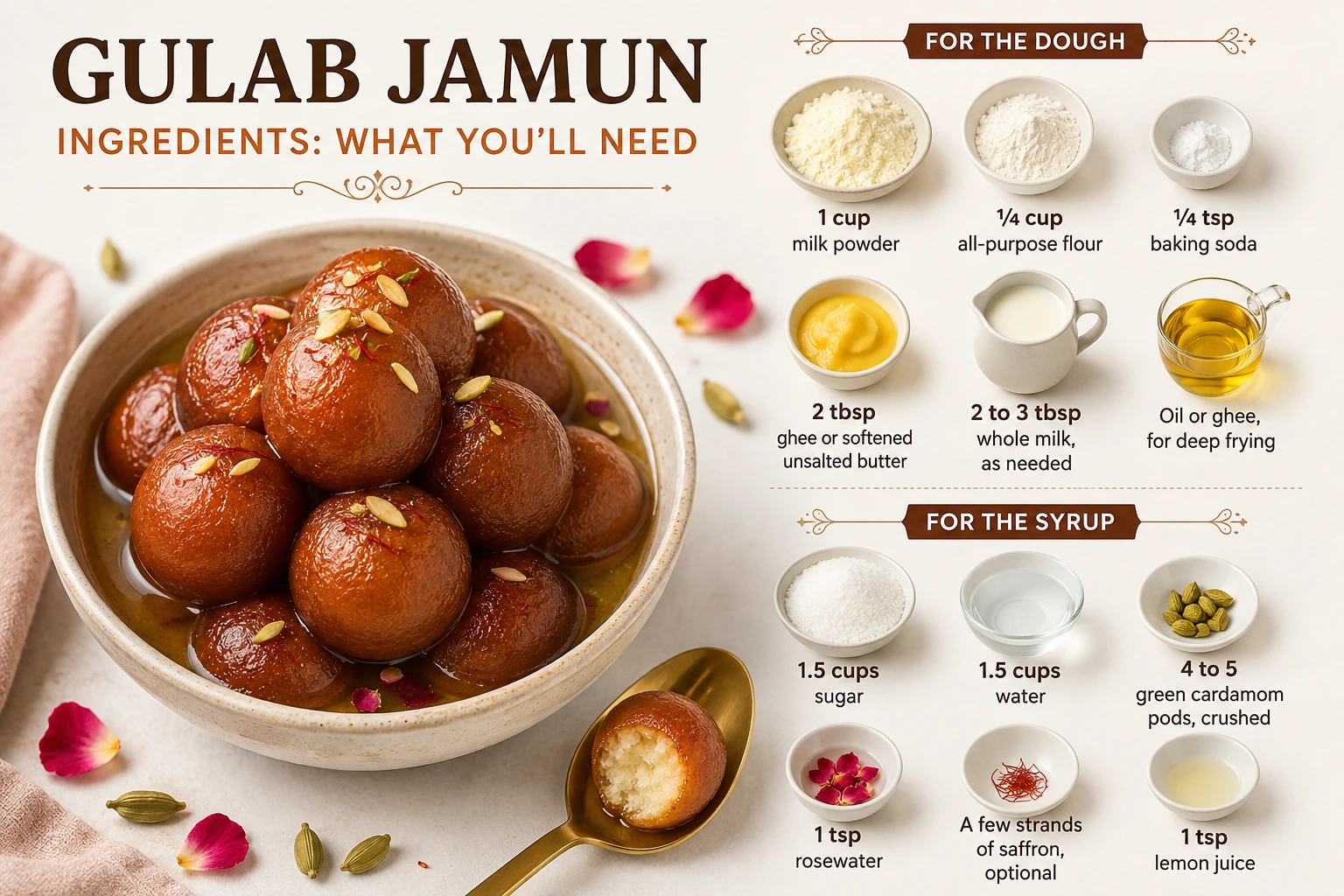
These desserts sit right next to pumpkin pie without clashing, because they bring the same cozy, sweet comfort that fall desserts are known for. Want the background? Read what gulab jamun is and how kulfi differs from ice cream. If you want to make gulab jamun at home, try our step-by-step gulab jamun recipe.
Sample Halal Thanksgiving Menus by Group Size
Here are three ready-to-use halal Thanksgiving menu ideas. Mix and match based on your guest list and how much you want to cook.
Small Gathering (2 to 4 People)
- Mix Grill for Two or Kabab Platter 1
- Homemade mashed potatoes and cranberry sauce
- Lentil soup as a starter
- Gulab jamun and a slice of pumpkin pie
Family Dinner (6 to 10 People)
- Kabab Platter 2 plus one butter chicken tray
- Kabuli pulao and roasted root vegetables
- Chana masala for vegetarian guests
- Firnee, kulfi, and apple crisp
Big Friendsgiving or Community Dinner (25+ People)
For a masjid hall, community centre, or large family event, catering is the smarter route. Our catering packages start at $13.99 per person for 25 guests or more and include samosas, kababs, chana masala, rice, naan, and dessert. Higher tiers add butter chicken, salad, and Kabuli pulao. You can compare every tier in our guide to halal catering packages for every event.
Hosting a Big Harvest Dinner?
Halal catering packages for 25 guests or more in Durham Region and Brampton. Ask about pickup or delivery when you book.
Book Catering Call 289-288-5857How to Plan a Halal Thanksgiving Dinner Without the Stress
The best holiday dinners are planned in small steps, not in one panicked afternoon. Use this simple timeline whether you cook everything, order everything, or do a bit of both.
- Two weeks before: confirm your guest count and ask about allergies and vegetarian guests.
- Ten days before: order your halal turkey, or decide on your platter and trays.
- One week before: book catering if you have 25 or more guests, so your preferred date and menu are easier to secure.
- Two days before: shop for vegetables and bake desserts that keep well.
- The day before: make cranberry sauce, chop vegetables, and set the table.
- Dinner day: pick up your platter about 30 minutes before guests sit down so it stays hot.
Planning a work potluck the same season? Our guide to office holiday party catering covers halal menus and when to book.
Where to Order Your Halal Thanksgiving Dinner in Durham Region and Brampton
If you are searching for halal Thanksgiving food near me, The Kabab Shoppe has four Ontario locations with online ordering for pickup. Pickering and Oshawa stay open until 3am every night, and Brampton until 3am on Fridays and Saturdays, which helps when guests show up late or you need a second round. Brampton families can also read our Brampton halal restaurant guide or our page on halal catering in Brampton.
Daily: 11am to 3am
Phone: 905-492-3114
Order Pickering
Sun to Thu: 11am to 10pm, Fri and Sat: 11am to 11pm
Phone: 905-493-7008
Order Whitby
Sun to Thu: 11am to 1am, Fri and Sat: 11am to 3am
Phone: 289-667-4222
Order Brampton
Need help picking the right size? Call us at 289-288-5857 and our team will help you match the platter to your guest list. You can also see every store on our locations page.
Halal Thanksgiving Dinner FAQs
Can Muslims celebrate Thanksgiving?
Many Muslim families in Canada enjoy Thanksgiving as a cultural holiday focused on family and gratitude rather than a religious event. Views differ between scholars and families, so each household decides for itself. Families who take part usually make sure the whole menu is halal.
What can I serve instead of turkey for a halal Thanksgiving dinner?
Good turkey alternatives include roast or tandoori chicken, slow-roasted lamb, and a mixed kabab platter with chicken, beef shish kabab, and chaplee kabab. A kabab platter is the easiest option because it comes ready with rice, salad, and naan.
Where can I get a halal Thanksgiving dinner in Pickering, Whitby, Oshawa or Brampton?
The Kabab Shoppe serves fully halal kabab platters, family trays, and catering from locations in Pickering, Whitby, Oshawa, and Brampton. You can order online for pickup or call 289-288-5857 for help choosing the right size.
Is store-bought stuffing and gravy halal?
Not always. Many stuffing mixes and gravies use non-halal chicken broth, pork fat, bacon, or wine. Read the ingredient list and look for a halal certification, or make both at home with halal broth and butter.
How many kabab platters do I need for a Thanksgiving dinner?
Kabab Platter 1 feeds 3 to 4 people and Kabab Platter 2 feeds 5 to 6. For 8 to 10 guests, combine Platter 2 with a family tray. For 25 guests or more, a catering package starting at $13.99 per person is usually the better value.
Make This Your Easiest Halal Thanksgiving Yet
The best halal Thanksgiving dinner ideas are the ones that let you sit down and actually enjoy your family. Keep a few classic sides, check the labels on stuffing, gravy, and pie crust, and let a kabab platter take the place of a long day at the oven. Your guests get a full, fully halal table, and you get your afternoon back.
Whether you are hosting four people in Whitby or forty in Brampton, we are ready to help. Order your platter online, book catering for a bigger crowd, or drop by your nearest location in Pickering, Whitby, Oshawa or Brampton.
Ready to Fill Your Holiday Table?
Fresh, fully halal kabab platters, family trays and catering across Durham Region and Brampton.
Order Your Platter Book Catering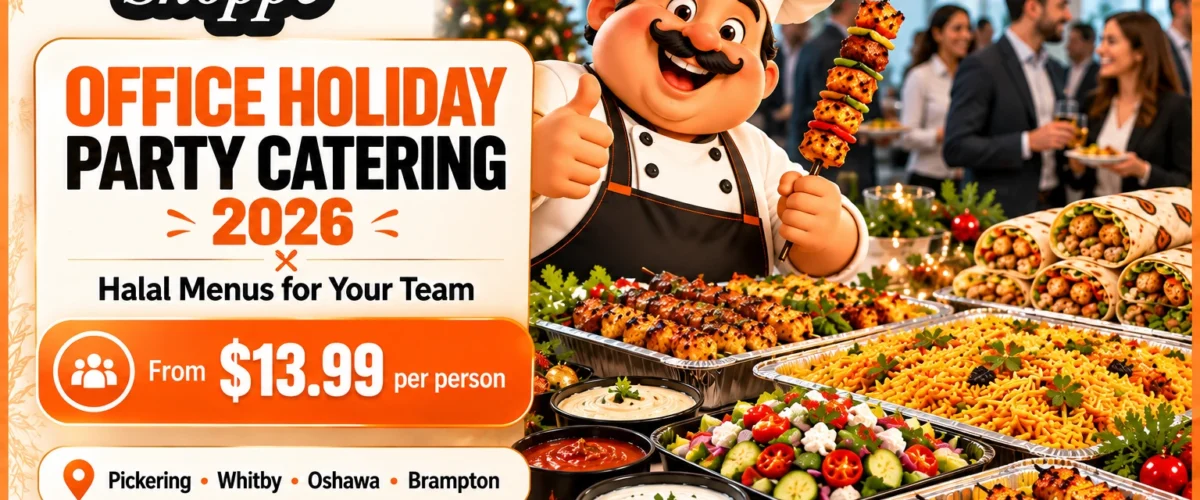



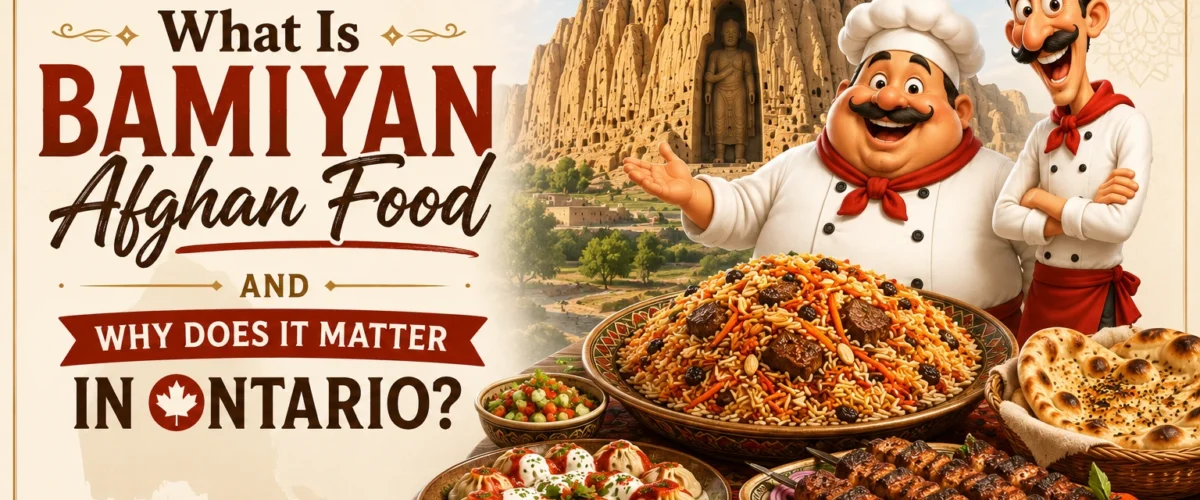
 Long before it became a name people recognize from restaurant signs across Ontario, Bamiyan was a real place with a long, layered history. It's a province and city in the central highlands of Afghanistan, sitting along one of the busiest stretches of the old Silk Road. Traders moving between China, Persia, and India passed through Bamiyan for centuries, and they brought more than goods with them — they brought spices, cooking techniques, and ingredients that shaped what Afghan food tastes like today.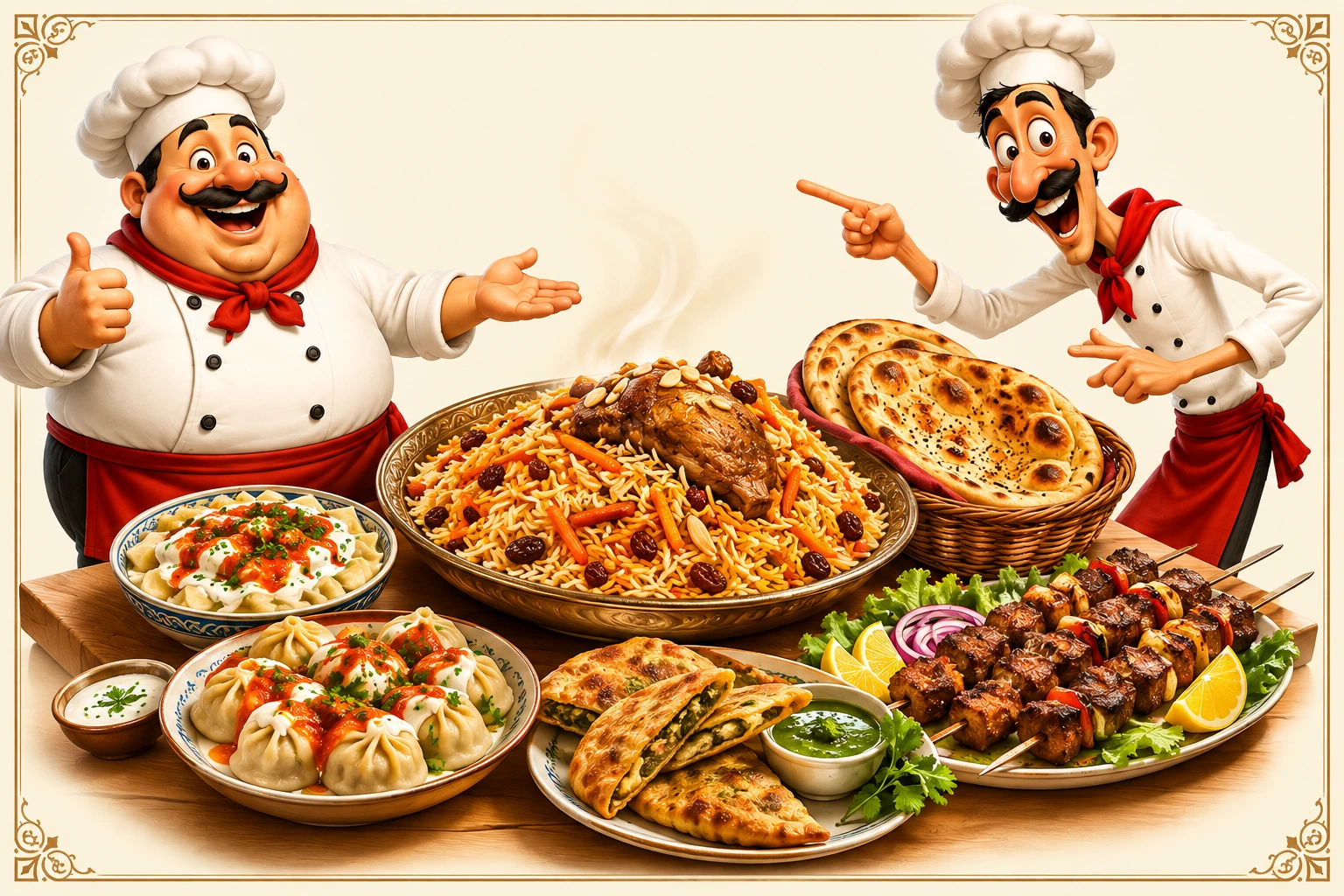
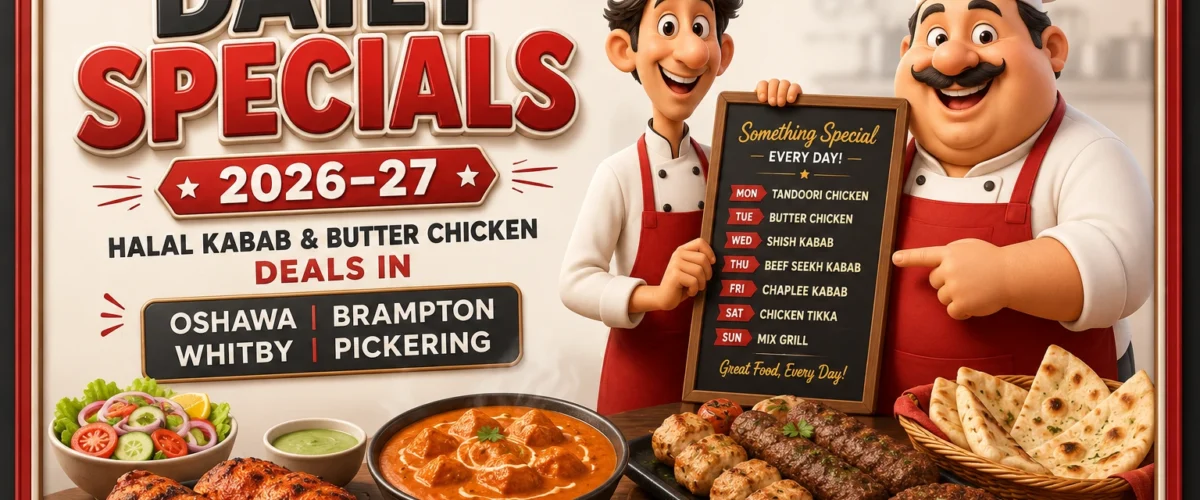
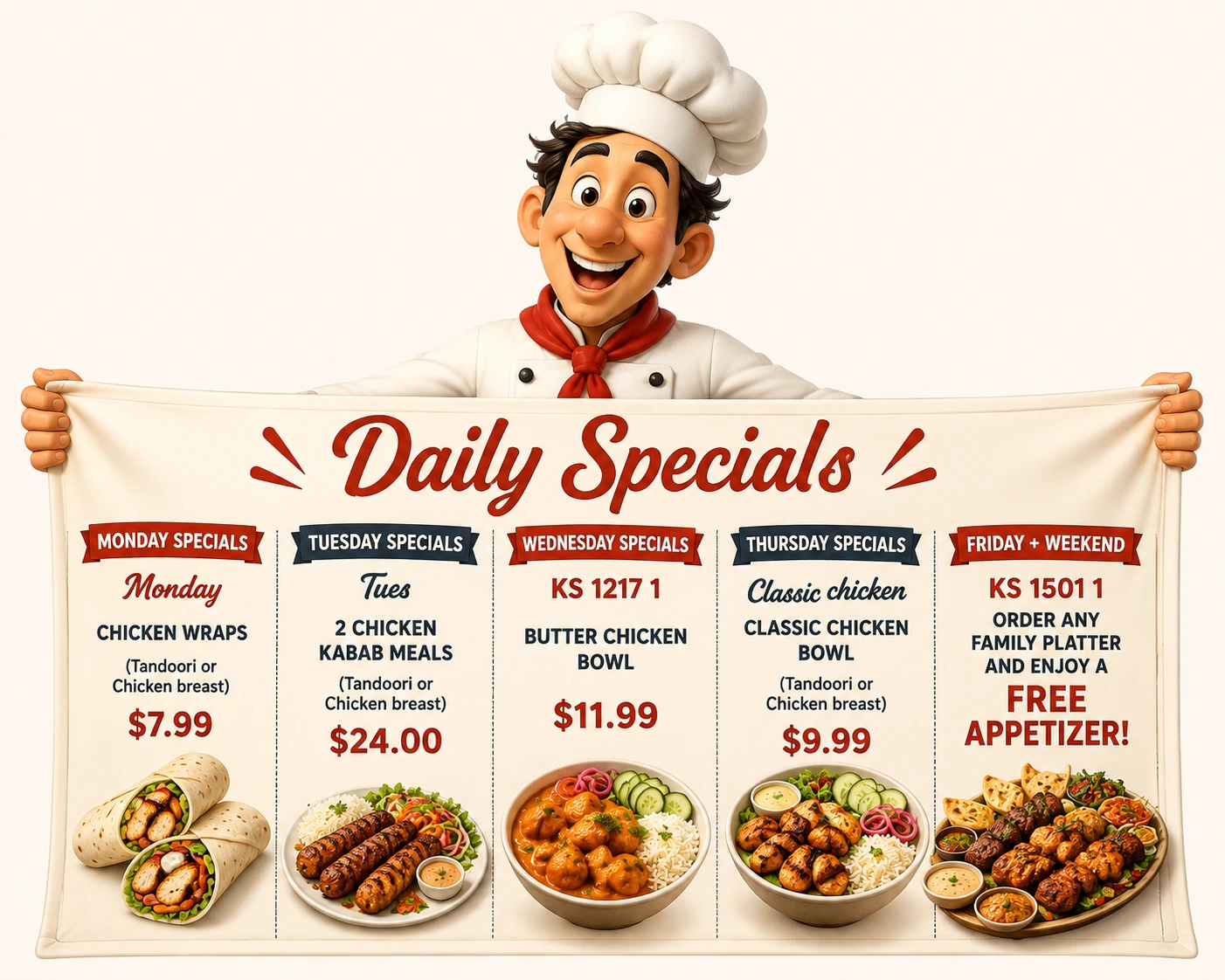 Halal food prices have crept up everywhere in Ontario going into 2026 and 2027, and if you're feeding a family or grabbing lunch on a work break in Durham Region or Brampton, that adds up fast. That's the whole reason our daily specials exist: a fixed, honest price for a real meal, every single day, at every Kabab Shoppe location — not a one-week promo that quietly disappears. Below is exactly what's on offer each day, what it costs, and which of our Oshawa, Brampton, Whitby, and Pickering locations you can get it at.